
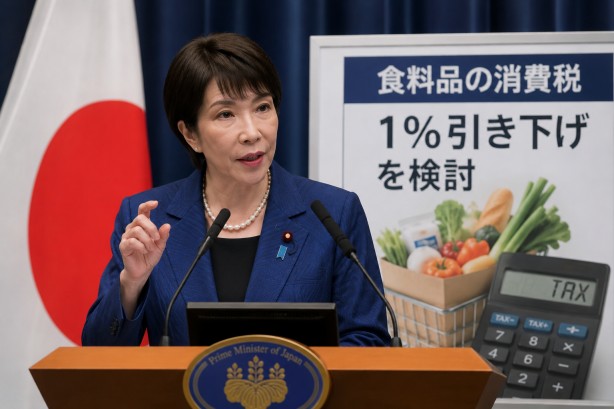
Japanese Prime Minister Sanae Takaichi is poised to direct the ruling Liberal Democratic Party to advance a plan aimed at slashing the consumption tax on food items from the current 8% to just 1%. This tax reduction is intended to be in effect for two years, commencing in April 2027. The initiative emerges from a stalemate in discussions across party lines concerning tax reform. The proposed tax cut is supported by the government and the ruling coalition, who also advocate for additional cash assistance targeted at low- and middle-income households.
The proposal is set to include approximately ¥600 billion in financial aid to further alleviate the cost-of-living pressures faced by citizens. This significant financial package seeks to ease the economic burden on households, ensuring that the most vulnerable segments of the population receive the support they need during challenging times. By reducing the consumption tax on food, the government aims to make daily necessities more affordable, contributing to the overall welfare of its citizens.
The government has set its sights on finalizing this policy by early August. This timeline is crucial for drafting the necessary legislation, which is expected to be introduced during an extraordinary parliamentary session later in the year. The legislative process is essential to ensure that the new tax measures are in place and ready for implementation by the following April.
As the ruling Liberal Democratic Party moves forward with this proposal, the focus remains on achieving a consensus that can facilitate the temporary tax cut. This initiative reflects the government’s proactive approach to addressing economic challenges and supporting its citizens through targeted financial relief measures.
The outcome of this proposal will hinge on the ability of the government and the ruling coalition to navigate the complexities of tax reform, balance fiscal responsibilities, and respond effectively to the needs of the population. By committing to substantial financial support and a significant tax reduction, the government aims to bolster economic stability and enhance the quality of life for its people during the designated period.