
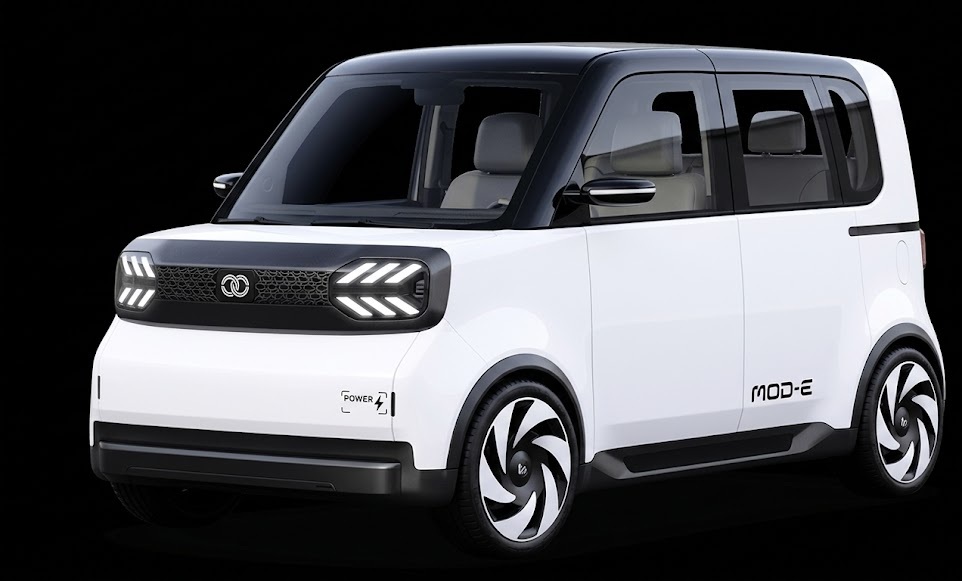
A new electric vehicle brand called EMTA has been introduced, targeting Japan’s automotive market, thanks to a collaboration between several Japanese companies and Chinese automaker Chery Automobile. The brand’s first model, a compact electric kei car, is slated for release in 2027, marking a strategic entry into one of Japan’s most significant vehicle segments.
The Yokohama-based EMT Co. spearheads the initiative, which brings together notable Japanese firms such as Autobacs Seven and Anest Iwata, alongside Chery Automobile and a battery manufacturer, among others. While the planning and marketing of the kei EV will be conducted in Japan, the design and manufacturing tasks will be carried out in China. The vehicle is expected to feature cutting-edge digital technology, including wireless software updates, smartphone connectivity, and capabilities for automated driving.
Kei cars, which are compact vehicles designed for short trips, account for over a third of new vehicle sales in Japan, making them an appealing starting point for electric vehicle expansion. With range anxiety being less of a concern due to their typical usage, EMT is looking to capitalize on this opportunity. The company is also considering utilizing select Autobacs stores as retail outlets and has plans to roll out three more electric vehicle models by 2029. Additionally, there is potential for future manufacturing within Japan and expansion into international markets.
This announcement comes amidst growing competition in Japan’s kei EV sector. Chinese automaker BYD is gearing up to introduce its Racco kei EV specifically for the Japanese market. At the same time, Nissan Motor has broadened its Sakura lineup by offering a more affordable version. In parallel, Suzuki Motor is preparing to launch a kei EV within the current fiscal year, and Honda Motor is in the process of developing an electric variant of its popular N-Box model, expected to be available by 2028.
The surge in new entrants underscores the increasing momentum in Japan’s small electric vehicle market, as automakers vie for the attention of budget-conscious urban consumers. The strategic moves by these companies highlight a concerted effort to dominate a segment that is rapidly evolving and becoming more competitive.